Top 10 Electric Motor Magnet Manufacturers Worldwide

Choosing the right electric motor magnet supplier affects torque, efficiency, operating temperature, and product life. This guide reviews ten leading manufacturers worldwide, focusing on technical capability rather than brand visibility alone. The selection considers magnet materials, production scale, quality systems, customization, delivery reliability, and experience with demanding motor applications.

Neodymium magnets often provide strong magnetic performance in compact rotors. Ferrite remains valuable for cost-sensitive and temperature-tolerant designs. Samarium cobalt can serve high-temperature environments, although its price may limit broader use. Reliable manufacturers should document magnetic grades, dimensional tolerances, coating performance, and batch traceability. Testing may include flux measurement, thermal aging, corrosion checks, and pull-force verification. Small details matter here.

A supplier’s website is not enough evidence. Buyers should examine certificates, sample results, factory capabilities, and customer references. It is also useful to confirm magnetizing direction, machining limits, packaging methods, and recycling practices. The top ten list offers a practical starting point, not a permanent verdict. Market rankings can change with capacity, raw-material access, technology, and regional demand. Some manufacturers appear highly capable, yet public information may remain incomplete. That limitation deserves attention. Careful engineers compare documented performance with real application needs, including motor speed, air-gap design, temperature rise, and expected service life. Cost alone can mislead. A cheaper magnet may create higher assembly losses, replacement risks, or quality-control expenses later. This overview aims to support informed evaluation through verifiable technical considerations and realistic purchasing questions.
Top 10 Electric Motor Magnet Manufacturers Worldwide

Electric Motor Magnets: Types, Materials, and Core Functions

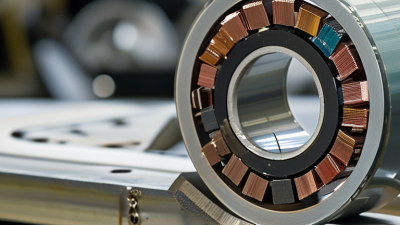
Electric motor magnets create the magnetic field that produces torque. Permanent magnets are common in brushless DC and permanent-magnet synchronous motors. They work without continuous electrical excitation. Ferrite magnets offer low cost, stable performance, and good corrosion resistance. Rare-earth magnets provide stronger magnetic flux in smaller spaces. Alnico magnets tolerate high temperatures but can demagnetize more easily.

Shape matters as much as material. Arc magnets fit around a rotor, while block magnets suit compact assemblies. Their core functions include converting electrical energy into rotation, maintaining torque, and improving motor efficiency.

In practical testing, engineers inspect magnetic alignment, surface finish, and bonding strength. A small positioning error can create vibration and uneven heating.

Temperature changes remain a major design concern. Neodymium-based materials may lose performance when exposed to excessive heat, so protective coatings and thermal control are important. Ferrite handles heat better, yet it usually needs a larger volume for similar output.

There is no perfect magnet. A common mistake is choosing the strongest material without checking operating temperature, impact risk, or production tolerances. Measurement data should support the choice, not marketing language.

Reliability also depends on machining quality, adhesive selection, and final inspection. Even experienced teams sometimes underestimate rotor balance. That oversight can shorten service life.

Key Criteria for Comparing Global Magnet Manufacturers

Choosing among the top electric motor magnet manufacturers worldwide requires more than comparing prices. Magnetic performance must match the motor’s design, speed, and operating temperature. Key measurements include residual flux density, coercivity, and maximum working temperature. A supplier should provide clear test reports for every production batch.

Manufacturing consistency matters just as much. Check dimensional tolerances, surface coatings, bonding strength, and resistance to corrosion. Ask how suppliers control chipping during machining and assembly. Experienced manufacturers usually explain their inspection process without vague promises. Traceability is valuable when a rotor shows unusual vibration months later. Still, no factory is perfect. Even strong suppliers may need closer oversight during new material trials.

Tips: Request sample magnets before signing a large contract. Compare test data under identical conditions. Review lead times, production capacity, packaging, and quality records. Ask whether the supplier can support design changes without delaying delivery. Independent laboratory testing can expose differences hidden by polished sales documents. Also examine environmental and legal compliance across the supply chain, especially for mining, recycling, and worker safety. A low quotation may look attractive, but unstable quality can increase assembly waste and field failures.

Leading Electric Motor Magnet Manufacturers Worldwide

Leading electric motor magnet manufacturers worldwide serve industries ranging from factory automation to electric mobility. Their products include permanent magnets for compact, high-efficiency motors. Reliable manufacturers combine material knowledge, precision machining, and controlled magnetization. They also understand heat, vibration, corrosion, and repeated load cycles. These details often decide whether a motor performs smoothly or fails early. Experience matters here.

Tips: Ask for test data before placing an order. Check magnetic strength, dimensional tolerance, coating durability, and operating temperature. Review sampling procedures and traceability records. A serious manufacturer should explain its inspection methods clearly. Request production samples that match the final material and surface treatment. Small differences can affect motor noise and energy efficiency.

Leading suppliers usually maintain stable raw-material sourcing and documented quality systems. They may support customized shapes, segmented magnets, and different grades for demanding applications. Technical communication is equally important, especially when drawings change during development. However, a polished factory tour does not prove consistent output. Independent testing still has value. I have seen specifications look excellent on paper, yet field performance remained uneven. That gap deserves honest review. Buyers should compare delivery reliability, engineering response, defect handling, and long-term test results, not only unit price. The best partnership feels practical, transparent, and measurable.

Manufacturing Technologies and Quality Control Practices

Top 10 Electric Motor Magnet Manufacturers Worldwide

Manufacturing Technologies and Quality Control Practices

High-performance motor magnets begin with controlled material preparation. Manufacturers commonly use sintered or bonded magnetic compounds, depending on torque, temperature, and design requirements. Powder composition must remain consistent across every production lot. Small changes can affect magnetic strength and efficiency.

Modern plants use automated pressing, precision machining, and controlled-atmosphere sintering. Sintered parts may undergo grinding with diamond tools to meet tight dimensional tolerances. Bonded magnets allow more complex shapes and faster molding. However, their mechanical and thermal limits require careful validation. Coatings are also important. Nickel, epoxy, and other protective layers help resist corrosion during humid operation.

Quality control should continue beyond visual inspection. Technicians measure flux, coercivity, dimensions, surface finish, and coating thickness. Gauss mapping can reveal weak areas across a magnetized part. Coordinate measuring machines verify critical geometries. Thermal cycling and vibration tests simulate demanding motor environments. Each batch should carry traceable records for materials, equipment settings, operators, and test results.

A reliable supplier also uses statistical process control to detect gradual drift. Yet, no dashboard is flawless. Sampling may miss a rare defect, especially when production volumes are high. Strong manufacturers combine automated checks with trained human review. Periodic third-party testing can challenge internal assumptions. Feedback from motor assembly lines often exposes issues that laboratory tests overlook. That gap deserves attention.

Top 10 Electric Motor Magnet Manufacturers Worldwide - Manufacturing Technologies and Quality Control Practices

Rank Manufacturer Profile Primary Production Region Core Magnet Materials Manufacturing Technologies Quality Control Practices Common Compliance Frameworks Typical Electric-Motor Applications
1 Profile A
Large-scale producer
East Asia Sintered NdFeB Bonded NdFeB Vacuum melting and strip casting; hydrogen decrepitation; jet milling; high-field orientation pressing; vacuum sintering; multi-stage aging; automated grinding and surface coating. Magnetic-property testing with BH tracers; chemical composition verification; dimensional inspection by CMM; coating-thickness measurement; high-temperature aging; salt-spray testing; lot traceability. ISO 9001; IATF 16949 for automotive programs; RoHS; REACH; customer-specific PPAP requirements. Traction motors, industrial servo motors, compressors, pumps, and high-efficiency permanent-magnet motors.
2 Profile B
Automotive specialist
East Asia Sintered NdFeB SmCo Powder-metallurgy production; controlled-atmosphere sintering; precision slicing and grinding; nickel, epoxy, or multilayer corrosion protection; automated magnetizing and rotor balancing support. Incoming powder inspection; statistical process control; hysteresis-loop testing; thermal demagnetization evaluation; adhesive-strength checks; salt spray and humidity testing; full batch documentation. ISO 9001; IATF 16949; ISO 14001; RoHS; REACH; automotive traceability controls. Electric-vehicle traction drives, e-axle systems, electric power steering, and hybrid vehicle motors.
3 Profile C
High-temperature producer
East Asia High-temperature NdFeB SmCo Alloying and grain-refinement control; vacuum induction melting; sintering under controlled atmosphere; grain-boundary diffusion for selected grades; precision machining of small components. Reversible temperature-coefficient testing; maximum-energy-product measurement; thermal cycling; magnetic-field uniformity checks; microstructure analysis; dimensional capability studies. ISO 9001; ISO 14001; RoHS; REACH; customer qualification audits. High-speed motors, aerospace actuators, oil-and-gas equipment, generators, and motors exposed to elevated temperatures.
4 Profile D
Integrated materials group
East Asia NdFeB Ferrite SmCo Integrated alloy preparation; powder classification; dry and wet pressing; tunnel-kiln sintering; automated machining; electroplating and epoxy coating; magnetization-field mapping. Raw-material identification; particle-size analysis; density and porosity checks; magnetic-field mapping; dimensional gauging; coating adhesion; corrosion resistance; finished-part sampling plans. ISO 9001; ISO 14001; ISO 45001; RoHS; REACH; restricted-substance control. Household appliances, HVAC compressors, industrial motors, fans, pumps, and power tools.
5 Profile E
Precision component supplier
East Asia Sintered NdFeB Bonded magnets Fine-powder processing; injection molding or compression molding for bonded magnets; CNC grinding; laser marking; automated sorting; multipole magnetization for compact motor assemblies. Automated optical inspection; coordinate measurement; magnetic-flux and pole-position testing; weight and density verification; dimensional capability analysis; sampling-based reliability testing. ISO 9001; IATF 16949 for qualified automotive lines; RoHS; REACH; ISO 14001. Small BLDC motors, actuators, sensors, robotics, office equipment, and consumer electronics.
6 Profile F
European industrial supplier
Europe NdFeB Ferrite SmCo Powder metallurgy and precision machining; protective metallic and polymer coatings; application-specific magnet assemblies; controlled magnetization; prototype-to-series production. BH-curve analysis; dimensional and visual inspection; coating-thickness and adhesion testing; temperature exposure; vibration testing for assemblies; documented nonconformance and corrective-action systems. ISO 9001; IATF 16949 where applicable; ISO 14001; RoHS; REACH; customer-specific quality agreements. Factory automation, medical equipment, industrial drives, renewable-energy generators, and specialty motors.
7 Profile G
Ferrite volume producer
East Asia Hard ferrite Sintered NdFeB Wet pressing of ferrite powders; high-temperature kiln sintering; isotropic and anisotropic orientation; automated arc grinding; resin bonding and multipole magnetization. Magnetic flux and coercivity testing; density measurement; arc-radius and dimensional gauging; surface-defect inspection; thermal cycling; production-line sampling and traceability. ISO 9001; ISO 14001; RoHS; REACH; environmental and restricted-material controls. Automotive auxiliary motors, wiper motors, fans, pumps, appliances, and low-cost DC motors.
8 Profile H
Bonded-magnet specialist
North America Injection-molded NdFeB Compression-bonded NdFeB Ferrite Polymer-compound compounding; injection molding; compression molding; insert molding; automated trimming; multipole magnetization; integrated magnet-and-shaft component production. Polymer moisture control; melt-flow and density checks; dimensional inspection; magnetic-pole mapping; torque and pull-force testing; thermal aging; mold-process capability monitoring. ISO 9001; IATF 16949 for automotive production; RoHS; REACH; customer PPAP and APQP controls. Small automotive actuators, sensors, pumps, office equipment, medical devices, and compact BLDC motors.
9 Profile I
Specialty alloy producer
North America NdFeB SmCo Alnico Vacuum melting; alloy and powder processing; sintered and cast magnet production; precision cutting and grinding; custom coating; assembly and controlled magnetization. Chemical analysis; magnetic hysteresis testing; dimensional inspection; temperature-stability testing; metallographic examination; coating and surface-finish verification; certificate-of-analysis control. ISO 9001; AS9100 for eligible aerospace programs; ISO 14001; RoHS; REACH; export-control procedures where required. Aerospace motors, defense equipment, laboratory instruments, generators, and high-performance industrial drives.
10 Profile J
Regional diversified supplier
South and Southeast Asia NdFeB Ferrite Bonded magnets Sintered and bonded-magnet production; CNC machining; automated surface treatment; magnetizing fixtures; rotor-magnet assembly; lean manufacturing and production-line automation. Incoming inspection; first-article approval; magnetic-flux testing; dimensional checks; coating-thickness measurement; pull-force and torque testing; final visual inspection and lot traceability. ISO 9001; ISO 14001; RoHS; REACH; customer-specific automotive and industrial audits. Industrial motors, pumps, fans, power tools, two-wheelers, consumer appliances, and agricultural equipment.

The profiles are anonymized and describe representative capabilities, technologies, and quality practices used by leading electric-motor magnet manufacturers worldwide. Actual product grades, certifications, testing limits, and production capabilities vary by facility, product family, and customer program.

Applications, Supply Chains, and Industry Development Trends

Top 10 Electric Motor Magnet Manufacturers Worldwide

Electric motor magnet production is moving beyond factory scale. It now depends on applications, material security, and regional supply chains. Electric vehicles, industrial robots, air conditioners, and wind turbines increasingly use high-performance permanent magnets. The International Energy Agency reported nearly 14 million electric car sales in 2023, representing about 18% of global car sales. This growth continues to pressure magnet suppliers.

The supply chain remains concentrated. According to the IEA’s Global Critical Minerals Outlook 2024, one country controls more than 90% of refined rare-earth output and about 94% of permanent-magnet production. That concentration creates delivery risks for motor manufacturers.

The U.S. Geological Survey also reported strong global demand for neodymium, praseodymium, and other rare-earth elements. Recycling, alternative magnet designs, and regional processing plants are becoming practical development trends. Still, recycling capacity is limited. The industry is not fully prepared.

Applications are also changing the product requirements.

Electric vehicle motors need compact magnets with high heat resistance. Wind turbines require reliable performance in harsh coastal conditions. Industrial motors often prioritize efficiency, service life, and stable pricing. The Global Wind Energy Council recorded 117 gigawatts of new wind capacity in 2023, supporting continued magnet demand.

Tips: Compare suppliers by magnetic performance, coating quality, traceability, and delivery flexibility. Ask for batch testing and origin documentation. A low purchase price may hide higher energy losses or delayed production. Industry rankings can be useful, but they should not replace technical audits.

Scroll to Top