Top Direct Current Permanent Magnet Motor Manufacturers?

The market for the direct current permanent magnet motor is becoming more specialized, not merely larger. Manufacturers now compete on efficiency, thermal control, noise, lifespan, and supply security. These details matter when a motor drives a conveyor, medical pump, robotic joint, or battery-powered vehicle.

The International Energy Agency reported nearly 14 million electric car sales worldwide in 2023. That expansion increases demand for compact, controllable, and efficient motor systems. U.S. Department of Energy guidance also identifies motor-driven equipment as a major share of industrial electricity consumption. The opportunity is substantial. The engineering margin is not.

Professor Z. Q. Zhu, a leading electrical-machine researcher, describes permanent-magnet machines as offering “high torque density and high efficiency.” His observation explains the technology’s appeal, but it should not end the analysis. Rare-earth costs, demagnetization risk, brush wear, controller quality, and cooling design can separate a dependable product from an attractive datasheet. Some manufacturers publish impressive peak efficiency figures while providing limited information about continuous-load performance. That gap deserves scrutiny.

This guide compares leading direct current permanent magnet motor manufacturers through practical criteria. These include rated torque, duty cycle, efficiency maps, testing standards, customization capability, after-sales support, and documented field experience. Company size alone is not enough. A smaller specialist may provide better winding design or faster engineering support. Conversely, a global supplier may offer stronger quality systems and supply continuity.

The ranking is therefore not absolute. Application requirements change the answer. A motor for a compact actuator needs different priorities than one for a factory conveyor. That is where many buying decisions become imperfect—and expensive.
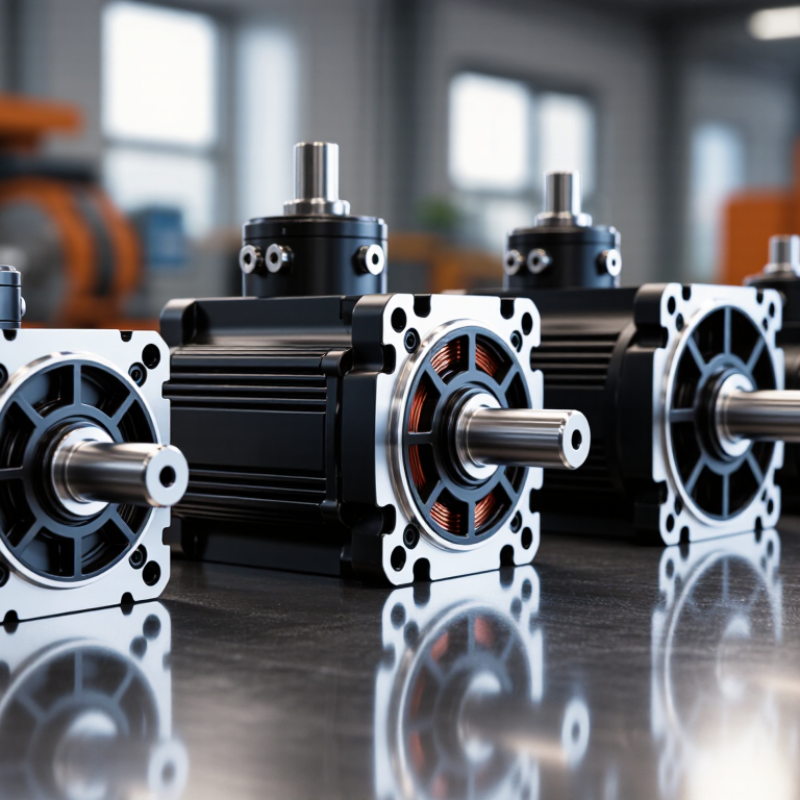
Top Direct Current Permanent Magnet Motor Manufacturers?

Define PMDC Motors by Voltage, Torque, Speed, and Efficiency Ratings

Top Direct Current Permanent Magnet Motor Manufacturers?

Define PMDC Motors by Voltage, Torque, Speed, and Efficiency Ratings

A PMDC motor should be judged by operating data, not catalogue appearance. Voltage defines the electrical supply, commonly 12, 24, or 48 volts. Torque shows the turning force available at the shaft. Starting torque matters for pumps, actuators, and conveyor loads. Speed is usually listed in revolutions per minute, but it changes with voltage and load. A 3,000 rpm rating may fall sharply under heavy resistance. This is often overlooked.

Efficiency connects input power with useful mechanical output. A motor rated at 80% efficiency converts 800 watts from 1,000 watts supplied. Heat receives the rest. The International Energy Agency reports that electric motor systems consume more than half of global electricity. Small efficiency gains therefore have practical value. IEC 60034-2-1 testing methods can support credible loss and efficiency comparisons, although test conditions must match the application. A laboratory figure is not always a field result.

Tips: Request efficiency curves, not one headline percentage. Check rated voltage, continuous torque, peak torque, speed range, duty cycle, and winding temperature. Confirm whether efficiency includes the controller. It often does not. Also ask for test tolerances and noise data. A lower-voltage motor may seem safer, yet it can demand higher current and thicker wiring. Manufacturer selection should rely on traceable test reports, application experience, and consistent production records. Some specifications remain incomplete, and that deserves careful questioning. (IEA, Energy Efficiency 2016; IEC 60034-2-1)

Set Manufacturer Evaluation Criteria Using IEC 60034 and IP Protection Standards

Top Direct Current Permanent Magnet Motor Manufacturers?

A credible manufacturer should be assessed through documented performance, not polished claims. IEC 60034 helps define ratings, temperature rise, efficiency, testing, and operating conditions for rotating electrical machines. Request test reports for the exact motor configuration, not a similar catalog model. Check rated voltage, continuous current, duty cycle, speed, torque, and thermal limits. A motor that performs well in a short demonstration may fail during eight-hour operation.

IP protection must be verified separately through the applicable IP classification requirements. The first digit addresses solid particle protection. The second digit addresses water protection. IP65, for example, indicates dust protection and resistance to water jets under defined test conditions. It does not prove chemical resistance, corrosion resistance, or suitability for immersion. Inspect the enclosure, shaft seal, cable entry, and mounting interface. Small gaps often become large maintenance problems.

Tips: Ask for routine test records, material traceability, and a clear warranty process. Compare measured efficiency across the intended load range. Review vibration and noise data when the motor drives fans, pumps, or precision equipment. During supplier audits, examine sample units and test instruments. No checklist is perfect. My own evaluation would remain cautious when documents look complete but operating assumptions are missing. Reliable selection depends on repeatable evidence, realistic installation details, and transparent limits.

Top Direct Current Permanent Magnet Motor Manufacturers? - Set Manufacturer Evaluation Criteria Using IEC 60034 and IP Protection Standards

Manufacturer evaluation framework for permanent-magnet DC motors using internationally recognized rotating-machine, enclosure-protection, performance, safety, and test requirements.

IEC 60034 and IP Protection Evaluation Criteria
No. Evaluation Dimension Applicable Standard Objective Acceptance Criteria Required Manufacturer Evidence Suggested Weight
1 Rated voltage, current, speed, torque, and duty IEC 60034-1 The nameplate and datasheet shall clearly state rated voltage, rated current, rated speed, rated torque or output, duty type, frequency where applicable, and ambient conditions. The offered rating shall match the purchaser’s operating point. Rated-data sheet, nameplate drawing, duty-cycle definition, and type-test or routine-test records. 15%
2 Performance and operating-point verification IEC 60034-1; IEC 60034-2-1 where applicable to the selected test method Measured speed, torque, current, input power, output power, and efficiency shall be reported at defined operating points. Pass limits shall be agreed in the purchase specification because IEC 60034 does not establish one universal efficiency value for every DC permanent-magnet motor design. Calibrated dynamometer report, test-point matrix, uncertainty statement, and efficiency calculation method. 15%
3 Duty cycle and thermal capability IEC 60034-1 The manufacturer shall identify continuous duty or intermittent duty, load profile, starting frequency, permissible overload, ambient temperature, altitude assumptions, and thermal limits. Thermal performance shall be demonstrated for the specified duty cycle. Thermal test report, winding-resistance method or embedded-sensor data, duty-cycle chart, and derating curves. 12%
4 Enclosure protection against solids and water IEC 60034-5; IP code defined with reference to IEC 60529 The declared IP code shall correspond to the tested enclosure configuration. First characteristic digit: 5 indicates dust-protected and 6 indicates dust-tight. Second characteristic digit: 4 indicates protection against water splashing from any direction; 5 indicates protection against water jets; 6 indicates protection against powerful water jets. IP test certificate or laboratory report, enclosure drawings, gasket specification, shaft-seal details, and installation orientation limits. 15%
5 Cooling method and heat dissipation IEC 60034-6 The cooling method shall be identified using the applicable IC designation or an equivalent unambiguous description. Performance claims shall account for fan operation, airflow, mounting position, and surrounding temperature. Cooling designation, airflow or fan data, thermal model or test results, and derating information for restricted ventilation. 8%
6 Mounting arrangement and installation compatibility IEC 60034-7 The mounting designation, shaft orientation, flange or foot dimensions, terminal-box position, and permissible installation positions shall match the application. Mechanical interfaces shall be dimensionally controlled. Mounting-code declaration, dimensional drawing, tolerance table, shaft-load limits, and installation manual. 8%
7 Vibration and mechanical balance IEC 60034-14 Vibration shall be measured under defined speed, mounting, load, and measurement conditions. The selected vibration acceptance class and limit shall be stated in the purchase specification rather than assumed from the motor type alone. Vibration test report, balancing grade, bearing data, measurement locations, and applicable acceptance limit. 8%
8 Noise emission IEC 60034-9 Sound-power or sound-pressure data shall identify the test environment, speed, load, cooling arrangement, and measurement method. The result shall comply with the application’s specified acoustic limit. Noise test report, microphone configuration, test speed, cooling condition, and declared uncertainty. 5%
9 Insulation system and dielectric safety IEC 60034-18 series; applicable electrical-safety requirements Insulation materials, temperature capability, dielectric-strength test, insulation-resistance test, and creepage or clearance design shall be documented for the stated supply and environmental conditions. Insulation-system documentation, routine hipot record, insulation-resistance record, material certificates, and temperature-class information. 10%
10 Permanent-magnet, commutator, and brush reliability IEC 60034-1 principles plus manufacturer-specific validation plan The design shall demonstrate resistance to magnet demagnetization, brush wear, commutator sparking, thermal cycling, overspeed, vibration, and the specified start-stop duty. Acceptance limits shall be defined before testing. Endurance-test plan, magnet-temperature limit, demagnetization test, brush-life data, commutation inspection, and failure-analysis records. 10%
11 Quality system and production consistency ISO 9001 or equivalent quality-management framework; IEC test documentation The manufacturer shall demonstrate controlled design changes, traceable materials, calibrated test equipment, incoming inspection, process controls, final inspection, and corrective-action procedures. Quality certificate, process-flow chart, control plan, calibration list, sample inspection records, and change-control procedure. 7%
12 Documentation, traceability, and compliance transparency IEC 60034-1; IEC 60034-5; IEC 60529 Technical documents shall use consistent ratings, revision control, serial or batch traceability, clearly defined test conditions, and an IP designation that applies to the supplied configuration. Controlled datasheet, declarations, certificates, test reports, bill of materials traceability, and product-label photographs or drawings. 7%
Total Suggested Evaluation Weight 120%
Scoring note: The suggested weights above are adjustable procurement weights rather than requirements imposed by IEC. To convert them into a 100-point model, normalize each weight by the total weight or revise the percentages during project specification. IP54, IP55, IP56, and other ratings are not interchangeable; the selected rating must reflect the actual dust and water exposure of the installation.
Recommended supplier decision rule: Require documented conformity for all safety-critical criteria, pass the specified IP test for the final enclosure configuration, and compare manufacturers using identical voltage, speed, torque, duty-cycle, ambient-temperature, cooling, and measurement conditions.

Compare Leading PMDC Motor Makers Across 12 V, 24 V, and 48 V Platforms

Top Direct Current Permanent Magnet Motor Manufacturers?

Comparing PMDC motor makers requires more than checking rated voltage.

At 12 V, leading manufacturers often target compact equipment, mobility systems, and battery-powered tools. A typical motor may deliver strong starting torque, but cable losses become noticeable at higher current. Engineers should inspect stall current, brush life, thermal limits, and noise readings under real loads.

The 24 V platform offers a practical balance for automation, pumps, lifts, and small vehicles.

Established manufacturers usually provide broader speed ranges and better mounting options here. Look for continuous-duty ratings, shaft tolerances, encoder compatibility, and measured efficiency curves. A motor that performs well for ten minutes may still overheat during an eight-hour shift. That detail is often underexplained.

At 48 V, leading makers generally support heavier machinery and longer cable runs with reduced current demand.

Their stronger housings, improved insulation, and optimized commutation can support demanding cycles. However, performance depends on controllers, ventilation, load inertia, and battery quality. Datasheet figures are useful, not absolute. Independent testing with a torque sensor and temperature probe reveals more. In practice, the best supplier is not always the one with the highest peak torque. Service access, replacement parts, traceable test records, and honest duty-cycle guidance may matter more. Some comparisons still overlook mounting vibration, which can quietly shorten bearing life.

Assess Efficiency, Torque Density, Lifespan, Customization, and Global Capacity

Choosing a direct current permanent magnet motor manufacturer requires more than comparing catalog power ratings. Efficiency should be checked across the real operating range, not only at peak performance. Ask for measured data at low speed, rated load, and frequent acceleration. A motor reaching 90% efficiency on paper may perform differently inside a warm, compact machine. Measure the evidence.

Torque density matters when space is limited. Review continuous torque, peak torque, rotor inertia, and cooling design together. A small motor with high peak torque can overheat during repeated cycles. In practical testing, temperature rise after one hour often reveals more than a short demonstration. No rating is perfect.

Lifespan depends on bearings, brushes, seals, magnets, and operating conditions. Request endurance-test methods, maintenance intervals, and failure records where available. Customization should cover shaft geometry, winding voltage, feedback devices, connectors, and mounting patterns. Strong engineering teams provide drawings, samples, and clear tolerance data before production. Global capacity also requires scrutiny. Check production volume, component sourcing, quality controls, spare-part access, and regional technical support. A supplier may offer impressive capacity but struggle with small engineering changes. That weakness matters. In my assessment, transparent testing and responsive communication often predict project success better than factory size alone.

Identify Best-Fit Manufacturers for Robotics, Automotive, Medical, and Industrial Uses

Choosing a direct-current permanent-magnet motor manufacturer starts with the application, not the catalogue. Robotics builders need low backlash, rapid acceleration, quiet commutation, and encoder compatibility. The International Federation of Robotics reported 541,302 industrial robot installations worldwide in 2023. Motion demand is substantial. Ask manufacturers for torque-speed curves at operating temperature, not only headline torque. Small omissions matter.

Automotive applications often involve seat adjustment, pumps, fans, and braking auxiliaries. The IEA’s Global EV Outlook 2024 recorded almost 14 million electric car sales in 2023, about 18% of global car sales. This growth increases demand for thermal endurance, vibration resistance, and traceable testing. Medical equipment needs another fit: low noise, predictable positioning, cleanable surfaces, and disciplined documentation. Request material declarations, risk controls, and change-management records. Do not accept vague compliance claims.

For industrial machinery, compare service life, overload behavior, efficiency, and repair support. The U.S. Department of Energy estimates that motor-driven systems consume about 46% of global electricity. Efficiency testing deserves attention. A capable manufacturer should provide prototype samples, repeatable measurement methods, and clear production tolerances. I would also inspect communication speed and response time, because real machines rarely operate under perfect loads. A polished datasheet can still hide weak thermal performance. Supplier audits may feel excessive, but skipping them can cost more than the motor.

Scroll to Top