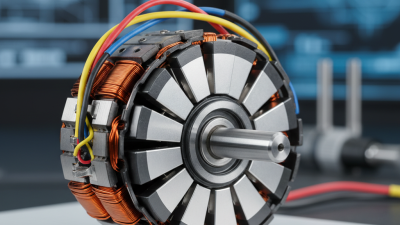
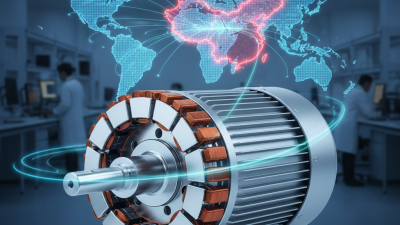
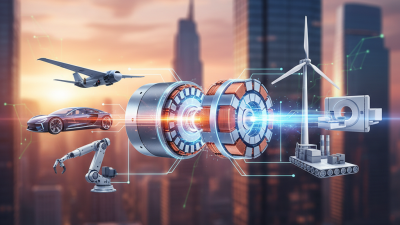
In recent years, the utilization of PM motors has surged across various industries in China. These motors, or permanent magnet motors, boast high efficiency and compact designs. They are pivotal in applications ranging from electric vehicles to industrial automation.
Understanding the types and applications of PM motors is essential for modern technology. Different designs serve unique purposes, making them versatile in fields such as robotics and renewable energy. However, this innovation comes with challenges. The manufacturing process of PM motors requires precise techniques and materials.
Furthermore, ongoing research is crucial for improving the performance and sustainability of these motors. Industries must also navigate the balance between cost and efficiency. By exploring China’s best PM motor types, we can grasp their significant impact on technology and industry today.
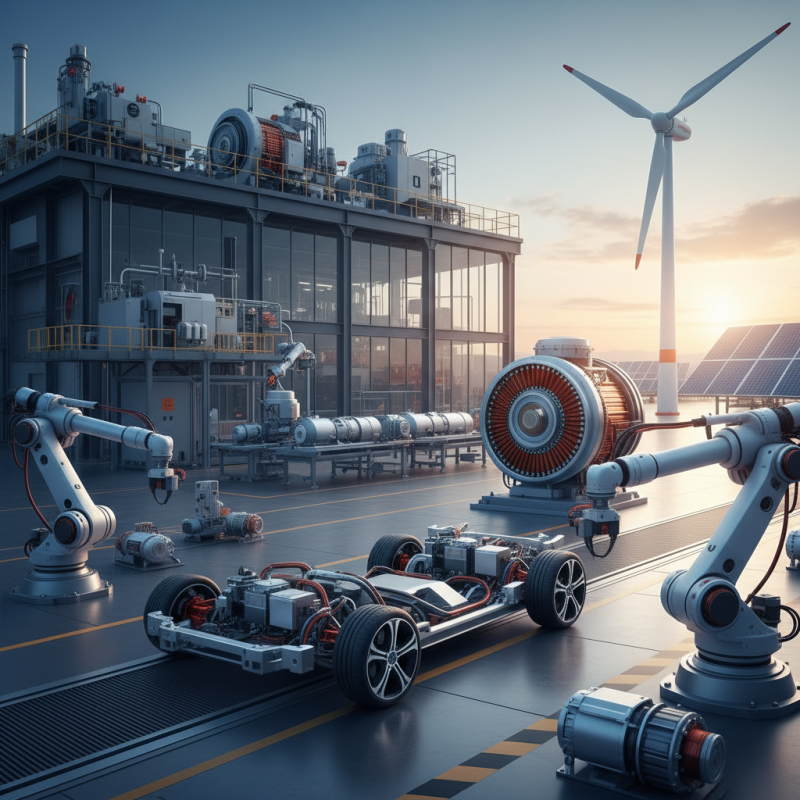
Permanent Magnet (PM) motors have gained significant traction in China due to their efficiency and performance. These motors utilize permanent magnets to produce magnetic fields, which helps in reducing energy consumption. According to a recent report from the China Electromechanical Industry Development Research Institute, PM motors are expected to account for over 35% of the domestic motor market by 2025. This growth is driven by the industrial sector's shift towards more sustainable technologies.
In various applications, PM motors excel in automation, robotics, and electric vehicles. They offer high torque density and reliability, making them suitable for a wide range of industries. For instance, in the automotive industry, they power hybrid and electric vehicles, leading to reduced emissions. However, the reliance on rare earth materials for magnets poses sustainability challenges. This feedback loop raises questions about the long-term viability of these resources.
Tips: Consider PM motor efficiency in your design process. Evaluate material sourcing choices. Explore alternatives to common rare earth magnets for sustainable options. As industries evolve, balancing efficiency with ecological responsibility remains crucial.
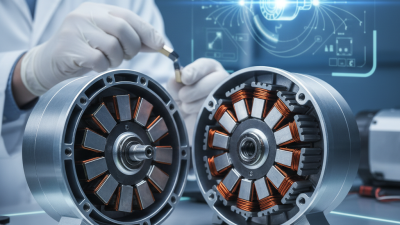
Permanent magnet motors (PM motors) are widely used in various industries due to their efficiency and compact design. These motors utilize permanent magnets to create a magnetic field, which eliminates the need for external excitation. This design results in lower energy consumption and reduced heat generation. Common types of PM motors include brushless DC motors, stepper motors, and synchronous motors. Each type has unique applications in fields ranging from automotive to manufacturing.
Brushless DC motors are particularly favored in electric vehicles. They offer high torque and efficiency, making them ideal for performance-driven applications. On the other hand, stepper motors excel in robotics and automation. Their ability to move in precise increments is crucial for applications requiring accurate positioning. Synchronous motors, often found in industrial machinery, provide consistent speed under varying loads, although their complexity can lead to higher maintenance needs.
Despite their benefits, PM motors are not without challenges. The reliance on rare earth materials for magnets raises concerns about supply stability and environmental impact. Additionally, the initial cost of these motors can deter some manufacturers. Ongoing research aims to improve the sustainability and affordability of permanent magnet technology, ensuring its continued relevance in modern industry.
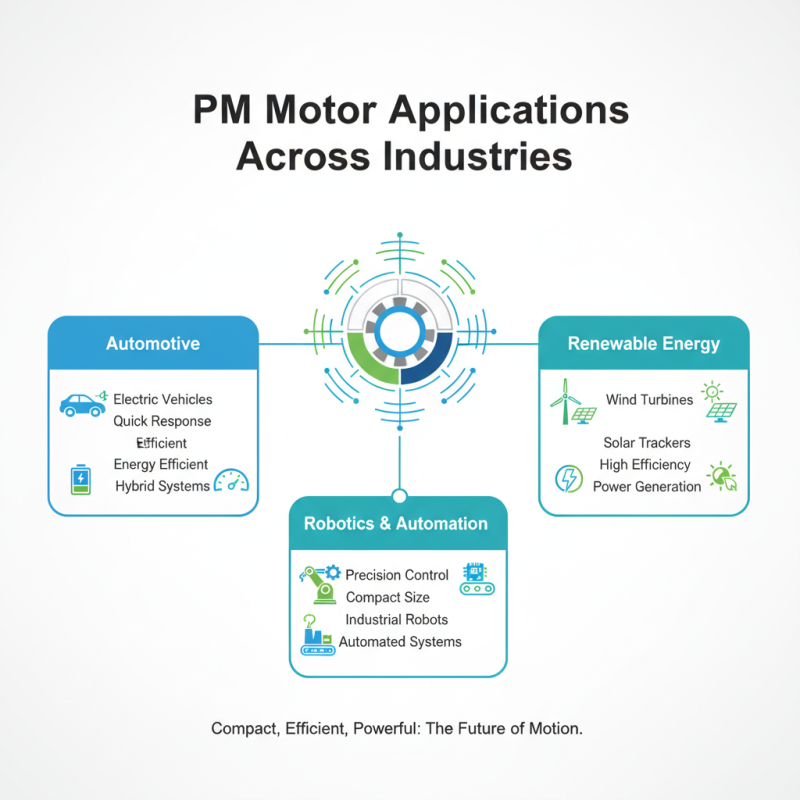
Permanent magnet (PM) motors have become vital in various industries. Their compact size and high efficiency make them suitable for diverse applications. In the automotive sector, PM motors drive electric vehicles, offering quick response times and reducing energy consumption. Many manufacturers utilize these motors to enhance fuel efficiency in hybrid systems.
In automation and robotics, PM motors excel due to their precision. They provide reliable torque control, which is crucial for robotic arms in assembly lines. These motors also find applications in CNC machines, where accuracy is paramount. However, the reliance on these motors can sometimes lead to performance inconsistencies under extreme conditions.
In renewable energy, PM motors are used in wind turbines for converting kinetic energy into electrical power. Their robust design allows for long-term operation with minimal maintenance. Nonetheless, the production of PM motors involves rare earth materials, prompting concerns about sustainability. Balancing performance with environmental impact remains an ongoing challenge in this sector.
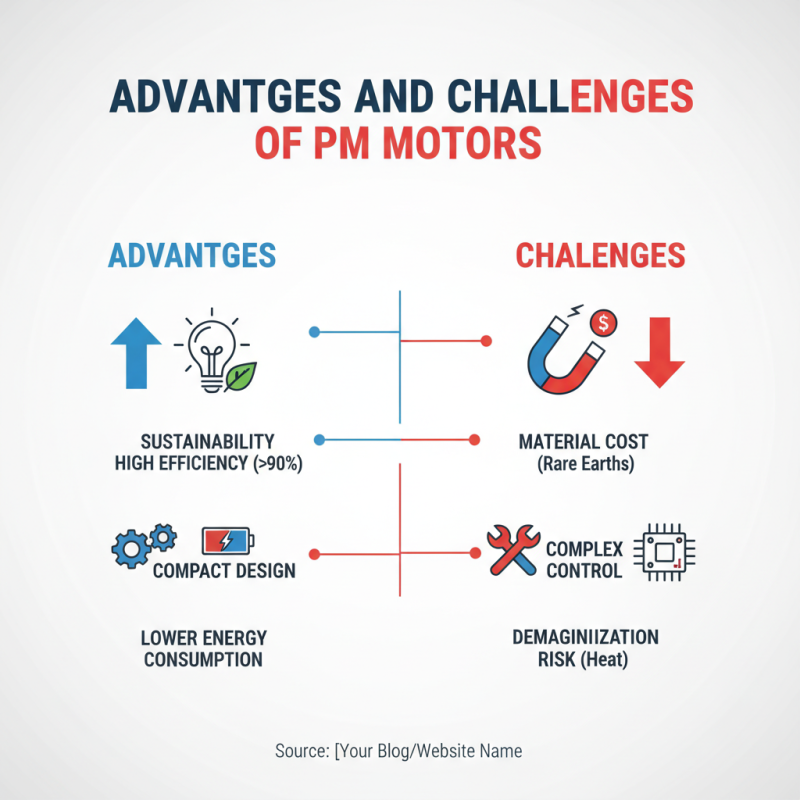
Permanent magnet (PM) motors offer significant advantages in industrial and technological applications. Their compact design allows for efficient space utilization. These motors provide high efficiency, often exceeding 90%. This efficiency translates into lower energy consumption. In industries that prioritize sustainability, reduced energy usage is a compelling benefit.
However, challenges also accompany PM motors. The reliance on rare earth materials raises concerns about supply chain sustainability. Fluctuating market prices for these materials can impact production costs. Moreover, high-performance PM motors can be more expensive to produce. This cost factor deters some industries from adopting these technologies. Engineers must balance performance and cost when selecting motor types for specific applications.
Another consideration is the thermal management of PM motors. Overheating can diminish performance and lifespan. Manufacturers are working on advanced cooling systems, yet this complexity adds to production considerations. Ultimately, while PM motors present substantial advantages, careful examination is necessary. Each application may require specific solutions tailored to its unique challenges.
The landscape of permanent magnet (PM) motor development in China is evolving rapidly. According to a recent report by the China Electrical Equipment Industry Association, the market for PM motors is expected to grow at a CAGR of over 8% from 2023 to 2028. This growth is driven by increased demand for energy-efficient solutions across various industries. The automotive sector, especially electric vehicles (EVs), is pushing the boundaries of PM motor applications. These motors provide higher torque and improved efficiency, which are essential for the rise of EVs.
However, there are challenges that need to be addressed. Material scarcity is a pressing issue. Rare earth elements used in PM motors face supply chain vulnerabilities. Additionally, the recycling of these materials remains inefficient. The government is investing in research to innovate alternatives and improve recyclability. The aim is to reduce dependency on imported resources.
Looking ahead, the integration of smart technologies into PM motors is a key trend. Industry reports indicate that incorporating AI and IoT will enhance motor performance and monitoring. There is potential for significant improvement in predictive maintenance, leading to lower operational costs. Yet, this requires substantial investment in R&D, which could be a barrier for smaller enterprises. These evolving trends signal a transformative period for PM motors in China, balancing opportunity with emerging challenges.